The AI company unveiled a scientific workbench for researchers and said it will pursue drug discovery for neglected diseases — a rare move for a frontier model maker.
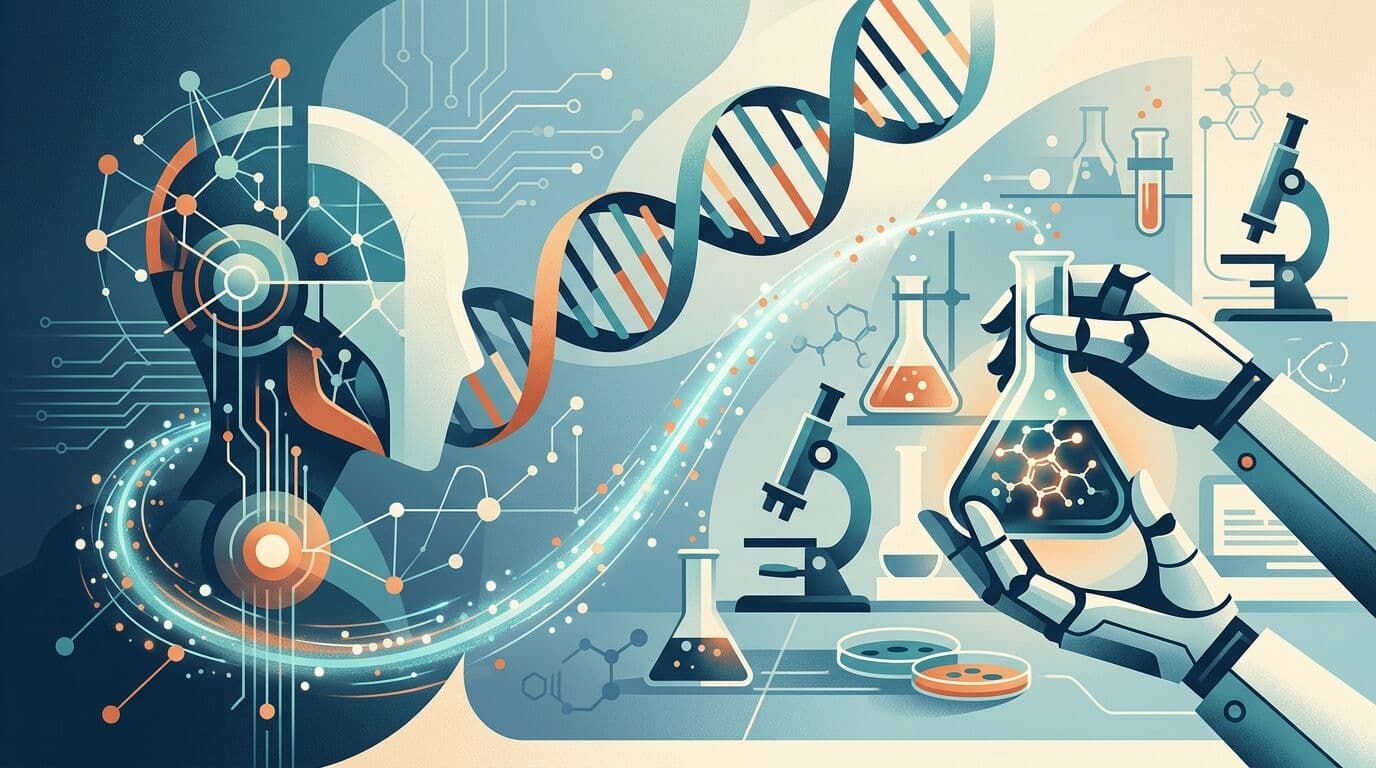
Anthropic announced Claude Science, a new AI workbench for scientists, and said it plans to develop its own drugs, making it one of the first major frontier AI companies to pursue drug development directly [1].
The dual announcement came at an event called “The Briefing: AI for Science” earlier this week [1]. Claude Science is designed to pull fragmented tools and datasets into a single environment and generate figures and visuals for researchers [1]. Anthropic framed the launch around what it describes as AI’s potential to “dramatically accelerate the pace of scientific discovery and the development of healthcare interventions,” and pointed to an existing list of biotech and pharma customers already using Claude [1].
Going Beyond Software
The more unusual move is Anthropic’s stated intent to discover drugs itself. Eric Kauderer-Abrams, the company’s head of life sciences, said Anthropic will focus on treatments for “neglected” diseases [1]. The company did not respond to The Verge’s requests for additional detail — including which diseases it plans to target first, and whether it would partner with other organizations for lab work, animal testing, clinical trials, or manufacturing [1].
That puts Anthropic in the position of selling software to drugmakers who could also become its competitors [1]. It joins a field that already includes AI-first drug companies such as Insilico and Isomorphic Labs — a spinout from Google DeepMind — as well as biotech startups and large pharmaceutical companies building or acquiring AI tools [1]. OpenAI, Amazon, and Google also have their own life sciences tools and platforms [1].
To support the effort, Anthropic has been hiring biologists and building its own wet labs over the past year, and had several open life sciences roles at the time of publication [1]. Namshik Han, a professor at the University of Cambridge and co-founder of AI biotech startup CardiaTec, told The Verge that Anthropic has been “actively recruiting” in the area and that he believes the company has hired candidates away from Big Pharma and prestigious academic institutions [1].
What AI Can — and Cannot — Do in Drug Discovery
Experts who spoke with The Verge were measured about what AI can realistically deliver. Han said AI is applied at “every single stage of drug discovery,” from finding new compounds to supporting clinical trials and manufacturing [1]. Matthew Todd, a professor of drug discovery at University College London, called “AI drug discovery” a “catchall phrase” given how broadly the technology is used across the field [1].
AI can already help generate candidate molecules and speed up early research, Han said, for example by suggesting compounds that could interact with cell receptors already known to be involved in a particular disease [1]. Todd said it is useful for “road testing” new drug ideas [1]. Given Anthropic’s work on frontier models, the company would presumably use generative AI to search across large chemical and biological datasets and help researchers surface connections that would otherwise be slow to find [1].
But the path from AI-generated candidate to approved medicine remains long. Todd said the field is “a long way off” from an AI-designed drug receiving regulatory approval for human use, and stressed that the discovery process would not run autonomously — human input and supervision would be required throughout [1]. Both Todd and Han flagged a shortage of publicly available, high-quality experimental data on how chemicals behave in the body as a potential bottleneck, even in well-studied areas of biology [1].
Frank von Delft, a professor of structural chemical biology at the University of Oxford and head of protein crystallography at the Oxford Centre for Medicines Discovery, said AI models “haven’t yet come close to making experiments unnecessary” [1]. Drug candidates still need real-world testing for efficacy, toxicity, and practical properties such as safe preparation, storage, and delivery — work that requires skilled staff, significant funding, and time [1]. If Anthropic wants to develop a drug, von Delft said, it is “going to have to spend a lot on experiments” [1].
No AI-designed drug has yet completed clinical trials and received approval from the U.S. Food and Drug Administration (FDA) to reach market, though some AI-developed candidates have entered trials [1]. Todd noted there is “always a big lag time” with medicine testing, adding: “It takes time to show experimentally that something’s safe” [1]. Any payoff from Anthropic’s drug development effort is likely at least a decade away, given typical clinical trial timelines [1].
Sources
This article was drafted with AI from the cited sources and checked against them before publication. Spot an error? Let us know.