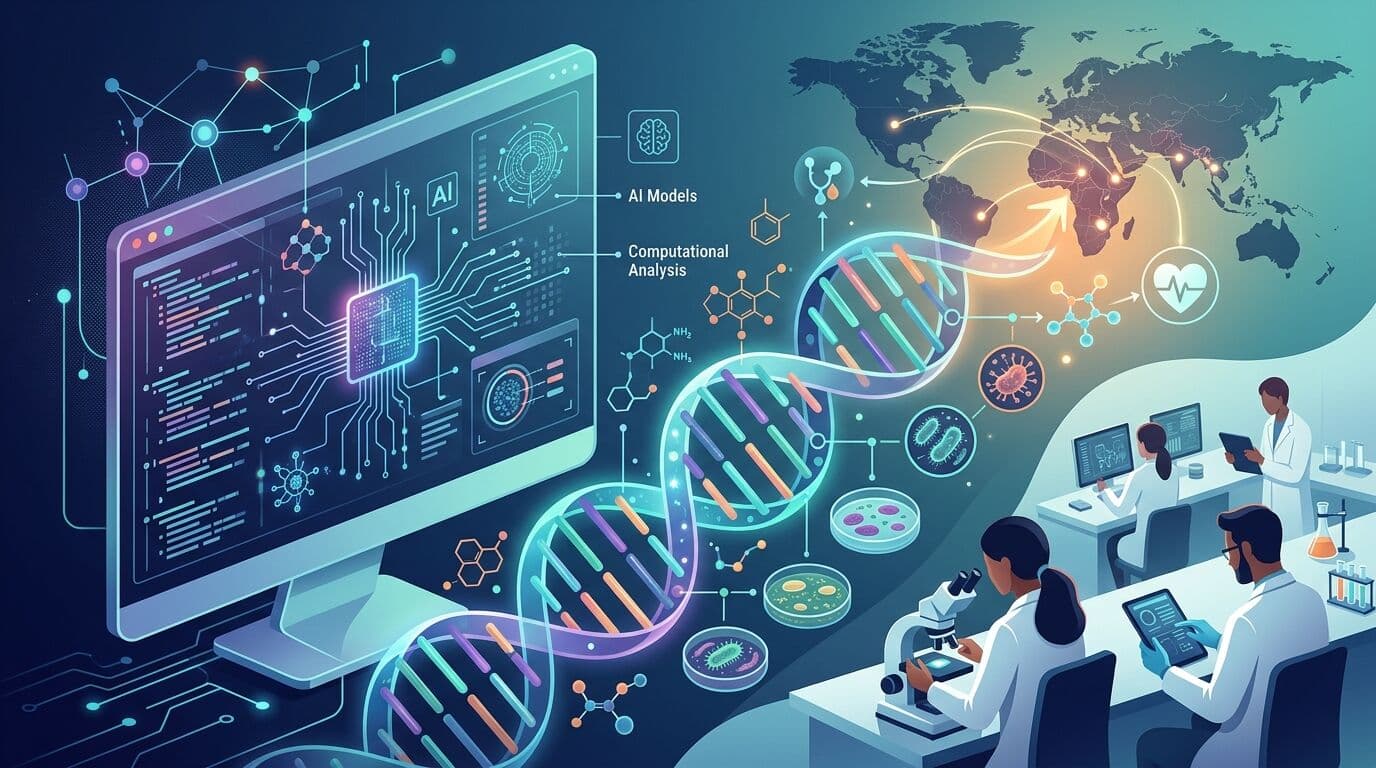
The AI company is launching its own preclinical research programs targeting diseases that traditional pharma won't touch, framing the work as both a mission play and a way to sharpen its science AI tools.
Anthropic is launching its own drug discovery programs focused on neglected diseases — conditions that traditional pharmaceutical and biotech firms have passed on as unprofitable — with work beginning at the preclinical stage [1].
The company says the initiative fits its nonprofit mission and will also give it firsthand experience to build better AI models and tools for the broader industry [1]. The announcement came during an event for Anthropic’s new science AI tool, Claude Science [1].
What Claude Science can already do
The launch event included early demonstrations of AI-assisted research. A researcher at the University of California, San Francisco used Claude Science to detect a viral contamination in minutes — a problem his team had failed to catch for an entire year, according to Anthropic [1]. The company also says Claude analyzed 100 rare genetic diseases in under an hour and identified 32 candidates for computational screening [1].
How much time AI could actually cut from drug development
Novartis chief executive Vas Narasimhan, who spoke at the event, said getting a finished drug candidate from development to regulatory approval currently takes about twelve years [1]. He broke that delay into three buckets: information latency, operational latency, and biological latency [1].
New AI tools could significantly reduce the first two categories, which together account for roughly 40 percent of total development time, potentially bringing timelines down to seven or eight years [1]. Biological latency — the time required for animal testing, cell models, and human clinical trials — is unlikely to shrink much [1].
Narasimhan also sees a path to doubling drug success rates from 8 to 16 percent through better safety predictions and optimized molecular properties, though he noted the effect of improved patient selection remains unclear [1]. The hardest problem, he said, is still determining whether a drug target is biologically the right one for a given disease [1].
To put the stakes in context: the major pharmaceutical companies collectively spend $150 to $200 billion a year on research and development and have produced only 800 to 1,000 drugs over 120 years, according to Narasimhan [1]. Even modest efficiency gains, scaled across that base, could open up previously unreachable drug targets, he said [1].
A crowded field with cautious observers
Anthropic is not alone in pushing AI into drug development. DeepMind chief executive Demis Hassabis co-founded Isomorphic Labs with Alphabet to apply AI directly to drug discovery, and DeepMind’s protein-structure prediction tool AlphaFold remains one of the most prominent examples of AI in biology [1]. AlphaFold co-developer John Jumper recently left for Anthropic [1].
On the clinical side, Google DeepMind introduced an AI Co-Clinician in 2026 built around what it calls triadic care, where AI agents support patients throughout treatment while the physician retains clinical authority [1]. OpenAI launched ChatGPT Health in early 2026, a dedicated section within ChatGPT that lets users connect medical records, Apple Health data, and wellness apps [1].
Independent researchers urge caution, particularly when AI is applied in clinical settings for diagnoses, treatment plans, and direct patient care. Catherine Pope of the University of Oxford described results so far as “a piece removed from the messy, complex, human world of everyday healthcare” [1].
Sources
This article was drafted with AI from the cited sources and checked against them before publication. Spot an error? Let us know.