The $180K Pricing Strategy That Actually Works
Most developers price their React component libraries like they’re selling to other developers. Big mistake. B2B buyers think differently, budget differently, and buy differently than individual developers grabbing packages from npm.
Last year, I helped a component library creator restructure their pricing from a single $299 license to a three-tier B2B model. Result? $180K in revenue by month 12. Here’s exactly how we did it and why it works.
Why Your Current Pricing Is Leaving Money on the Table
The typical React component pricing approach looks like this: “Premium UI Kit – $199 one-time.” Sound familiar?
This pricing strategy ignores how B2B companies actually think about developer tools. They don’t want to buy components. They want to buy solutions to business problems. Speed to market. Consistency across teams. Reduced development costs.
When you price like you’re selling to individual developers, you’re competing on cost. When you price for business value, you’re competing on outcomes. Guess which one pays better?
The Problem with Single-Tier Component Library Monetization
I’ve seen dozens of component libraries stuck at $50K annual revenue because they’re using developer pricing for business buyers. A single price point forces you to either:
- Price low and leave enterprise money on the table
- Price high and scare away smaller teams
- End up in the middle and appeal to nobody
None of these work long-term.
The Three-Tier B2B Software Pricing Framework
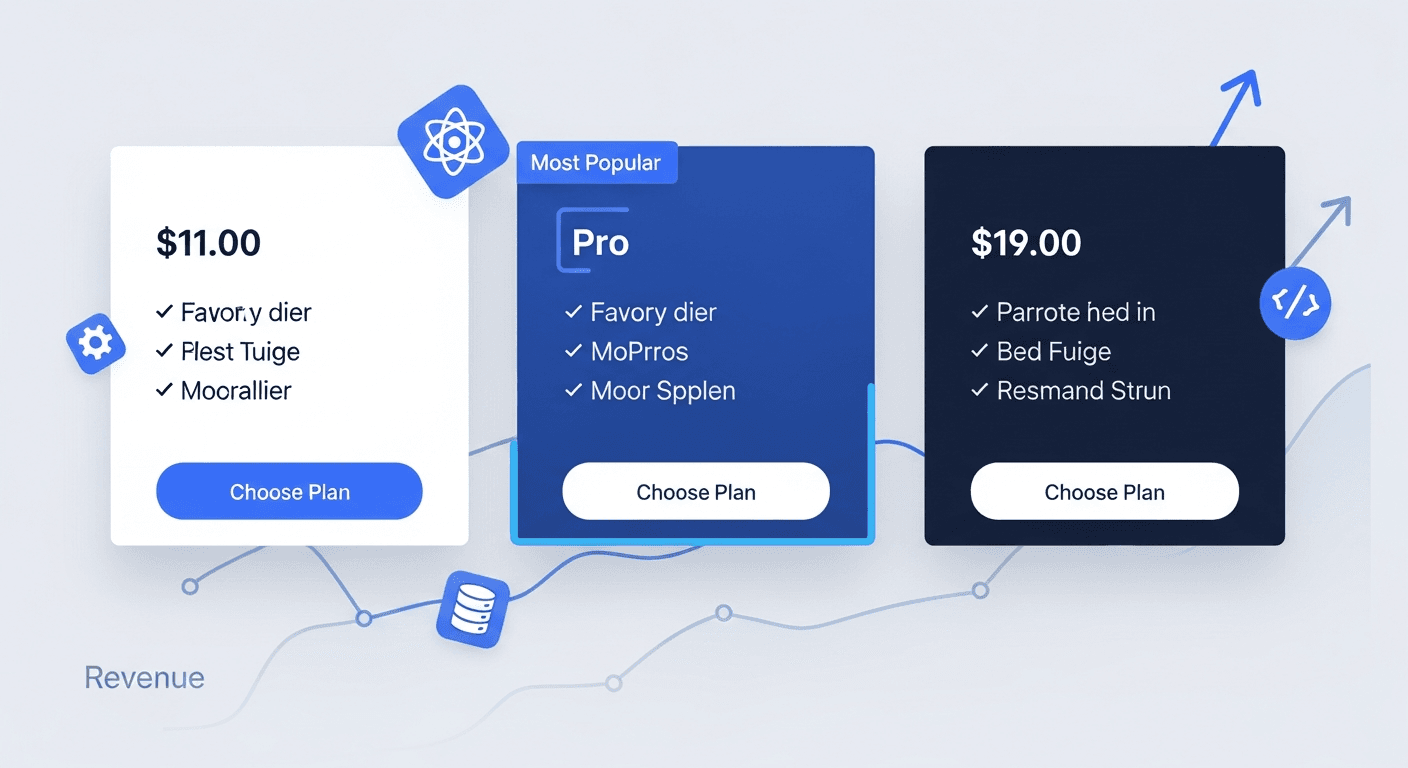
Here’s the framework that generated $180K: price for three distinct buyer personas, not three arbitrary price points.
Tier 1: Team Starter ($497/year for up to 5 developers)
This targets small development teams and agencies. The price point feels reasonable for a team budget, but it’s high enough to filter out hobbyists.
What’s included:
- Full component library access
- Standard documentation
- Email support with 48-hour response
- Basic usage analytics
The key insight? Small teams care most about getting started quickly. They don’t need enterprise features — they need components that work out of the box.
Tier 2: Business Pro ($1,997/year for up to 25 developers)
This is where most B2B revenue comes from. Mid-size companies have real budgets but need justification for spending.
Everything in Tier 1, plus:
- Priority support (4-hour response)
- Advanced theming and customization tools
- Team usage dashboards
- Integration with popular design systems
- Monthly strategy calls
Notice the shift? We’re not just adding more components. We’re adding business value: better support, team visibility, strategic guidance.
Tier 3: Enterprise Custom ($5,000+ annually)
Enterprise pricing should never be listed publicly. It’s always “Contact Sales.” Here’s why that works:
Large companies expect custom pricing. They want to feel like they’re getting a deal tailored to their specific needs. Standard pricing actually makes enterprise buyers suspicious.
Enterprise features focus on organizational needs:
- Custom component development
- On-site training and onboarding
- Dedicated success manager
- SLA guarantees
- White-labeling options
The real revenue driver? Enterprise deals averaged $8,200 in year one, with some reaching $15K annually.
SaaS Pricing Strategy Psychology That Drives Conversions
The magic isn’t in the tiers themselves — it’s in how they work together psychologically.
The Anchor Effect
When prospects see three options, they automatically compare them against each other, not against the competition. Your highest tier makes the middle tier look reasonable, even if $1,997 seemed expensive in isolation.
We positioned the Business Pro tier as “most popular” with subtle visual cues. About 68% of buyers chose this option — exactly what we wanted.
Developer Tools Revenue Through Value Metrics
Instead of charging per component or per download, we charged per developer. This scales naturally with company growth and aligns our incentives with customer success.
Per-developer pricing also eliminates the biggest objection in B2B software sales: “What if we grow and the costs get out of control?” Teams know exactly what adding developers will cost.
Implementation Details That Make or Break Success
The framework is just the start. Execution determines whether you hit $180K or stay stuck at $50K.
Annual vs. Monthly Billing
We offered monthly billing but incentivized annual payments with a 20% discount. Result? 73% of customers chose annual billing, improving cash flow and reducing churn.
Monthly prices were $49/$199/$Contact Sales. Annual brought them to $497/$1,997/Custom. The math works out to roughly 15-17% savings, which feels substantial without killing margins.
The Upgrade Path Strategy
Every tier should naturally lead to the next one. We built artificial constraints that encourage upgrades:
- Team Starter: Limited to 5 developers (enforced by license key)
- Business Pro: 25 developers max, but includes growth planning calls
- Enterprise: Unlimited everything
When teams hit limits, they already understand the value. Upgrading feels logical, not forced.
What surprised me? About 30% of Enterprise customers started at Business Pro and upgraded within six months. The entry point matters less than the upgrade experience.
Common Pricing Mistakes to Avoid
Based on observing dozens of component libraries, here are the mistakes that kill B2B growth:
Pricing too low out of fear. $199 for a component library that saves 200+ development hours is insulting to business buyers. They’ll question the quality.
Feature-based differentiation. “Premium includes 50 more components!” misses the point. Businesses buy outcomes, not features.
Complex licensing terms. Keep it simple. Per-developer, per-year. That’s it. Complex licensing creates friction exactly when prospects are ready to buy.
No clear upgrade path. If someone succeeds with your lowest tier, you should have an obvious way for them to give you more money.
Measuring Success Beyond Revenue
Revenue is important, but these metrics tell the real story:
- Average deal size: Increased from $299 to $2,100 with three-tier pricing
- Sales cycle length: Decreased from 45 days to 23 days (clear options reduce decision paralysis)
- Customer lifetime value: Jumped from $299 to $3,200 average
- Upgrade rate: 31% of customers upgraded tiers within 12 months
The upgrade rate is particularly telling. When customers grow with your pricing, you know you’ve aligned business incentives correctly.
Frequently Asked Questions
How do you enforce developer limits in component libraries?
We use license key validation that checks against registered developer emails. Teams can add/remove developers through a simple dashboard. It’s enforced through build-time checks, not runtime restrictions that could break production apps.
What if customers try to game the per-developer pricing?
Honestly? Most don’t. B2B buyers generally play by the rules because they want vendor relationships to work long-term. For the few edge cases, our license terms allow usage audits, but we’ve never needed them.
Should you offer discounts for annual payments?
Yes, but keep them reasonable. 15-20% is enough to incentivize annual billing without training customers to wait for bigger discounts. We’ve found larger discounts actually hurt perceived value.
How do you handle enterprise sales without a dedicated sales team?
Start with self-service onboarding even for enterprise. Use a simple form to qualify leads, then jump on a call to understand their specific needs. Most “enterprise” deals are just larger teams that need standard features plus some hand-holding.
What’s the best way to transition from single pricing to three tiers?
Grandfather existing customers at their current price but give them access to features from their equivalent new tier. New customers see the three-tier structure immediately. This protects existing relationships while optimizing for new growth.
How do you know if your pricing is too high or too low?
Track your win rate by tier. If everyone chooses your cheapest option, you might be priced too high overall. If 80%+ choose your most expensive listed tier, you’re probably leaving money on the table. Aim for 60-70% choosing your middle tier.