A representative poll of nearly 52,000 Americans finds job loss and cognitive dependency are the dominant AI anxieties, while trust in AI companies sits at just 15 percent.
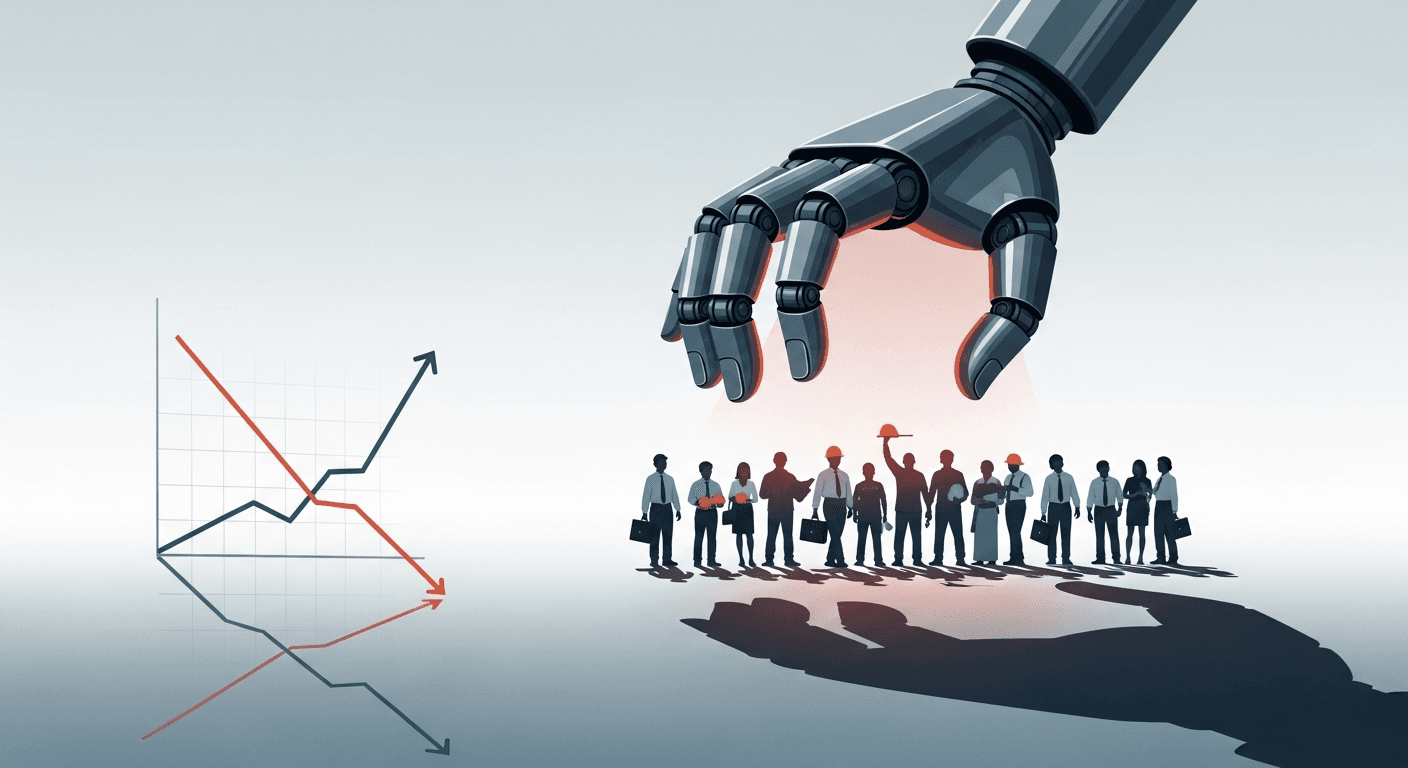
A large-scale Anthropic survey of 51,993 Americans has found that fear of AI-driven job loss is the single most common concern about the technology, cited by 64 percent of respondents and ranking first in every U.S. state polled. [1]
The survey, called Anthropic Public Record, was conducted online by YouGov between November and December 2025, covering adults aged 16 and older across all 50 states, the District of Columbia, and Puerto Rico. [1] Anthropic describes it as the first survey in the series aimed at the general public rather than users of its Claude chatbot specifically. [1]
Job loss topped the fear rankings, followed by cognitive dependency — the concern that AI use could erode people’s ability to think independently — at 56 percent, and misinformation at 52 percent. [1] Only 15 percent of respondents said they trust AI companies to make the right decisions about how the technology is built and deployed. [1]
The cognitive dependency finding contains a notable internal contradiction: of the 56 percent who expressed worry about it, only about one in five said they would actually struggle if AI disappeared tomorrow. [1] Meanwhile, among the 44 percent who are not worried about cognitive dependency, roughly a third said they would genuinely feel the disruption of losing AI access. [1]
Workers in arts and design and in education reported the highest concern about cognitive dependency. [1] Educators said they observe cognitive atrophy in students at a rate 2.5 to 3 times higher than the average respondent, according to an earlier study cited by Anthropic. [1]
On the positive side, 48 percent of respondents named curing diseases such as cancer and Alzheimer’s as one of their three biggest hopes for AI, making it the most commonly cited benefit. [1] Helping people with disabilities came second at 36 percent, while technological progress and making everyday life easier each drew 23 percent. [1] The least popular hope was AI serving as a therapist or cure for loneliness. [1]
Acceptance of AI assistance at work tracks with perceived capability: the more competent people believe AI is at a given task, the more willing they are to allow it to help. [1] About 75 percent of respondents rated AI at least as capable as humans at research, yet on most tasks a majority still did not want AI involved in their own work, and even for research and data analysis — where AI ratings were highest — nearly half said they want no AI involvement. [1]
Daily AI users at work were notably less anxious about job loss (54 percent) than people who do not use AI at all (70 percent), a gap Anthropic attributes to hands-on experience revealing both where AI helps and where it falls short. [1]
Anthropic separately published a qualitative study of 81,000 Claude users, conducted using its in-house tool called Anthropic Interviewer, which also found job loss and cognitive dependency at the top of user concerns. [1]
Sources
This article was drafted with AI from the cited sources and checked against them before publication. Spot an error? Let us know.