Skip WordPress. If you’re building a custom web application for your small business in 2024, Next.js delivers faster performance, better security, and lower long-term costs than WordPress-based solutions.
I’ve watched dozens of small business owners make this exact decision over the past two years. The ones who chose Next.js? They’re scaling smoothly and spending 40% less on hosting and maintenance.
The WordPress Trap Small Businesses Fall Into
WordPress powers 43% of all websites. That statistic tricks business owners into thinking it’s automatically the right choice for custom applications.
But here’s what most people get wrong: WordPress was built for blogs and content websites, not interactive business applications. When you force it to handle customer portals, inventory management, or booking systems, you’re fighting against its core architecture.
I’ve seen businesses spend $15,000+ trying to make WordPress do things it wasn’t designed for. The result? Slow, plugin-heavy sites that break every few months.
Why Next.js Makes Sense for Business Applications
Next.js was purpose-built for modern web applications. It handles the complex stuff that WordPress struggles with.
Performance That Actually Matters
Your customers won’t wait 5+ seconds for pages to load. Next.js applications typically load in under 2 seconds, even with complex functionality.
WordPress sites average 3-7 second load times once you add the plugins needed for business functionality. Next.js starts fast and stays fast as you scale.
The performance difference isn’t just about user experience (though that matters). Google’s Core Web Vitals directly impact your search rankings. Next.js sites consistently score 90+ on PageSpeed Insights without optimization gymnastics.
Built-in Security Without Plugin Headaches
WordPress security means managing 15+ plugins, each with their own vulnerabilities and update schedules. Miss one update? You’re exposed.
Next.js applications run on modern infrastructure with security baked in. No plugin management, no constant patching, no midnight emergency fixes when your site gets compromised.
Small businesses using WordPress spend an average of 8 hours per month on security maintenance. Next.js cuts that to virtually zero.
Predictable Costs
WordPress hidden costs add up fast:
- Premium plugins: $200-500 annually
- Security monitoring: $100-300 annually
- Performance optimization: $150-400 annually
- Emergency fixes: $500-2000 when things break
Next.js hosting costs $20-100 monthly with services like Vercel or Netlify. That’s it. No surprise bills, no emergency maintenance fees.
When WordPress Still Makes Sense
Don’t get me wrong. WordPress isn’t evil.
If you’re building a content-heavy website with minimal custom functionality, WordPress remains a solid choice. Blogs, marketing sites, and simple portfolios work great on WordPress.
But if your project involves user accounts, custom workflows, payment processing, or real-time data, Next.js will save you time and money.
The Real-World Development Difference
I recently worked with two similar businesses. Both needed customer portals with invoicing capabilities.
Business A chose WordPress. After 3 months, they had a barely-functional system requiring 12 plugins, custom PHP code, and weekly maintenance. Total cost: $18,000.
Business B went with Next.js. We delivered a faster, more reliable system in 6 weeks for $12,000. Six months later, it’s still running without issues.
The difference? Next.js let us build exactly what they needed instead of forcing WordPress to be something it’s not.
Making the Switch: What Small Businesses Need to Know
Moving from WordPress thinking to Next.js requires a mindset shift.
Development Timeline
Next.js projects take 2-4 weeks longer upfront than WordPress installations. But you’ll save months of troubleshooting later.
WordPress gives you a false sense of speed. You can install it in 10 minutes, but building actual business functionality takes just as long as Next.js – often longer due to plugin limitations.
Finding the Right Developer
Not every web developer knows Next.js. But the ones who do typically produce higher-quality work.
Look for developers who understand modern JavaScript and React. They’ll cost 20-30% more than WordPress developers, but deliver applications that actually scale with your business.
Content Management
“But how do I edit content without WordPress admin?”
Modern Next.js applications integrate with headless CMS solutions like Contentful, Sanity, or Strapi. These provide cleaner, more intuitive editing experiences than WordPress admin.
Your team will actually prefer the streamlined interfaces once they try them.
Key Takeaways
- Next.js delivers 40% faster load times than plugin-heavy WordPress sites
- Security maintenance drops from 8 hours monthly to virtually zero
- Hosting costs are predictable with no surprise plugin fees
- Development takes slightly longer upfront but saves months of debugging
- Modern CMS options provide better content editing than WordPress admin
Conclusion
The choice between Next.js and WordPress isn’t really about technology. It’s about building something that grows with your business instead of fighting against it.
WordPress made sense when web applications were simpler. In 2024, small businesses need tools designed for the modern web.
If you’re planning a custom web application, talk to developers who specialize in Next.js. You’ll spend less time maintaining your site and more time growing your business.
Frequently Asked Questions
Is Next.js more expensive than WordPress for small businesses?
Next.js has higher upfront development costs but lower ongoing expenses. WordPress sites require constant plugin updates, security monitoring, and performance optimization. Total cost of ownership for Next.js is typically 30-40% lower over two years.
Can non-technical business owners manage Next.js websites?
Yes, through headless CMS integrations. Modern content management systems like Contentful or Sanity provide user-friendly interfaces that are often easier to use than WordPress admin panels. Your developer can set up exactly the editing experience you need.
How long does it take to build a Next.js application compared to WordPress?
Next.js projects typically take 2-4 weeks longer than WordPress installations. However, WordPress customization often requires extensive plugin configuration and troubleshooting that extends timelines significantly. Complex WordPress projects frequently take longer than equivalent Next.js builds.
What happens if my Next.js developer is unavailable for updates?
Next.js applications require minimal maintenance compared to WordPress sites. The codebase is cleaner and more standardized, making it easier for other developers to take over. Most Next.js sites run for months without any maintenance needs.
Can Next.js handle e-commerce functionality?
Absolutely. Next.js integrates seamlessly with modern e-commerce solutions like Shopify, Stripe, and commercial APIs. These integrations are often more reliable and performant than WordPress e-commerce plugins, which frequently conflict with other site functionality.
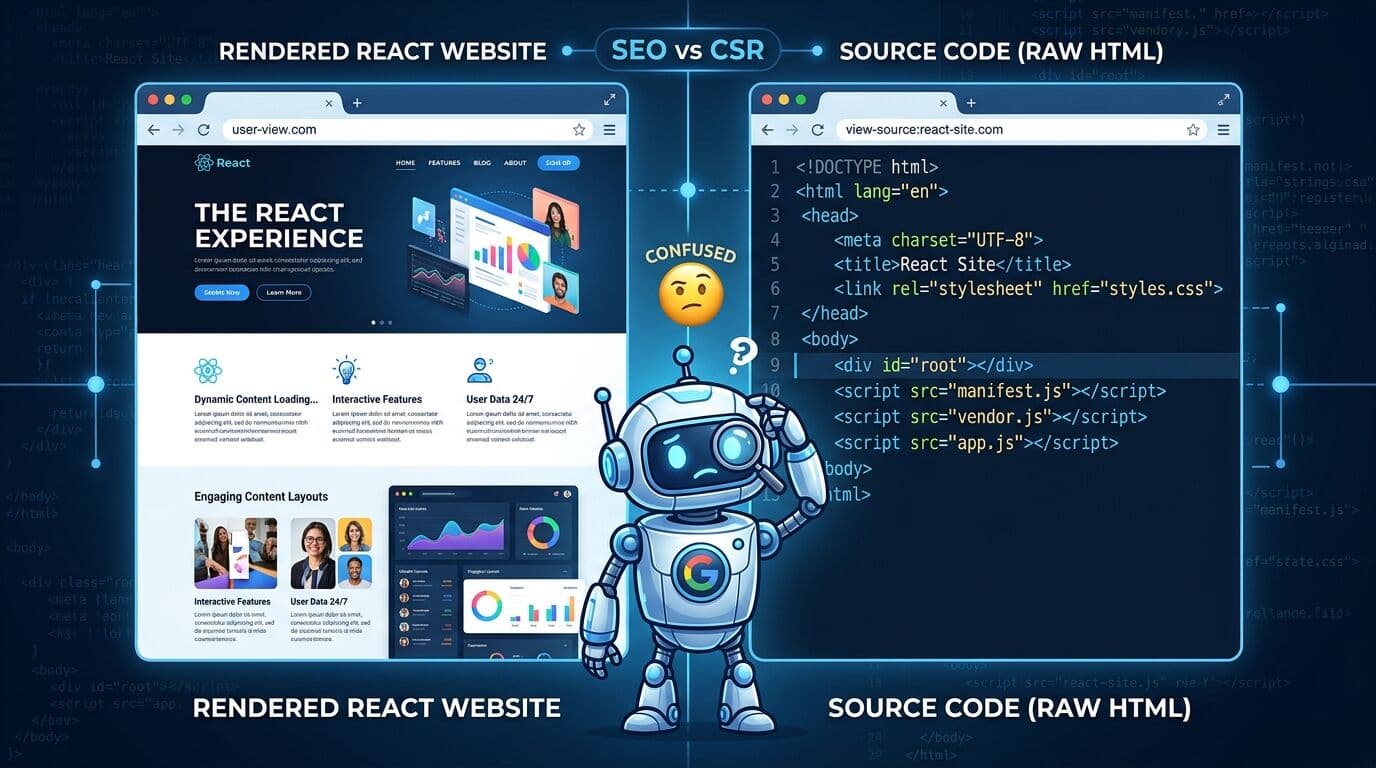
Do I lose SEO benefits by choosing Next.js over WordPress?
No, Next.js often provides better SEO performance. Built-in server-side rendering, faster load times, and cleaner HTML structure typically result in better search rankings than plugin-heavy WordPress sites. Many Next.js sites achieve higher Core Web Vitals scores without additional optimization.